Crowdsourcing Cosmic Lensing
The European Space Agency (ESA) has launched a public initiative titled 'Space Warps' on the Zooniverse platform, inviting citizen scientists to identify rare gravitational lensing phenomena within images captured by the Euclid space telescope. Gravitational lensing occurs when a massive foreground object, such as a galaxy, bends the light from a more distant background galaxy, creating distorted shapes like arcs or rings. These visual anomalies provide insights into dark matter and dark energy, key areas of study for the Euclid mission.
The Mechanics of Gravitational Lensing
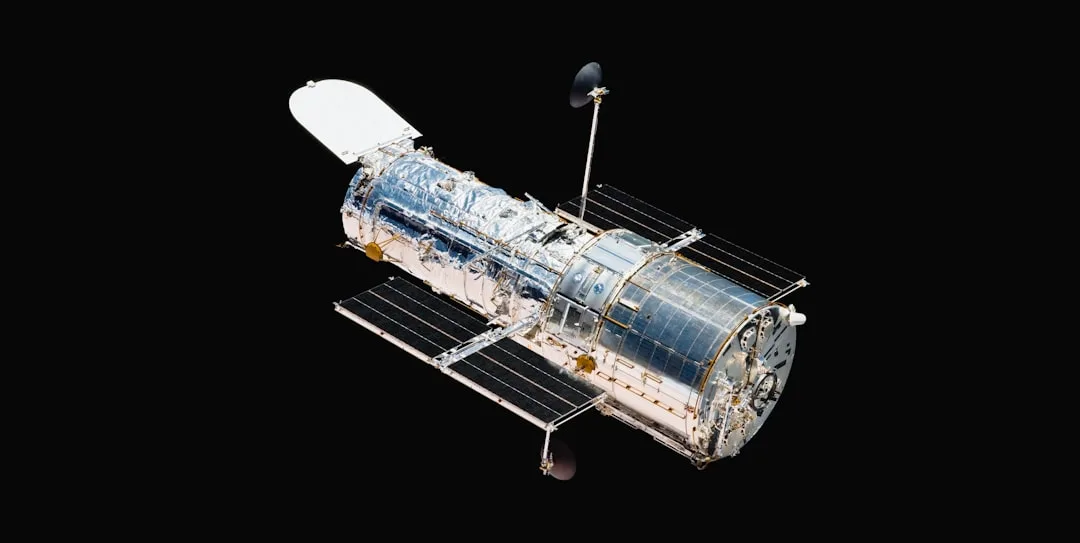
Participants in the project are tasked with scanning images to locate strong gravitational lenses, which are rare distortions of spacetime caused by massive objects. The Euclid telescope is designed to survey billions of galaxies, generating vast amounts of data. Machine learning is used to preselect potential lens candidates, but human input is crucial to identify subtle distortions that algorithms might miss. German research institutions, including the Max Planck Society, are supporting this effort.
Scientific Impact of Citizen Participation
This collaborative effort builds on the success of projects like Galaxy Zoo, which demonstrated the value of human pattern recognition in classifying galaxies. By identifying gravitational lenses, citizen scientists help researchers study the distribution of dark matter and the properties of dark energy. The Euclid mission aims to analyze the structure and expansion of the universe over six years, and public contributions will play a vital role in interpreting the data.
Gravitational Lenses and the Euclid Mission
Gravitational lenses offer a striking demonstration of Einstein's theory of general relativity, showing how matter in the universe can act as a natural telescope. The Euclid project is working with citizen scientists to search for these lenses in approximately 300,000 image datasets. The telescope captures images of deep field areas, revealing examples of gravitational lenses that provide new insights into the cosmos. This initiative allows the public to contribute directly to solving fundamental questions about the universe's invisible components.
As reported by Mirage News.


