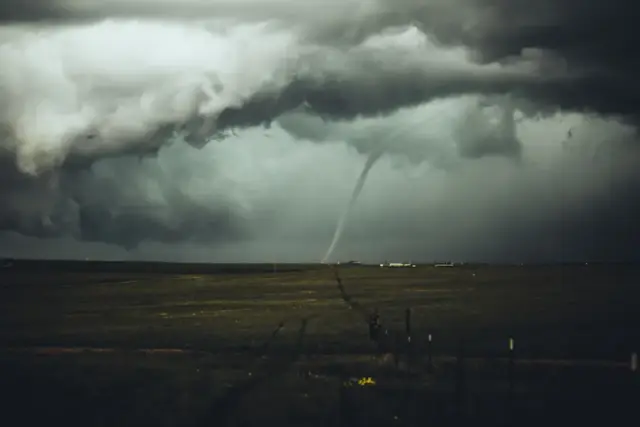
A series of violent tornadoes struck communities in the central United States late Thursday, leaving at least one person dead, hundreds of thousands without power, and widespread destruction across Illinois, Indiana, and Iowa. The storms, fueled by high heat and humidity, also brought dangerous conditions to the north-east, with flight cancellations and heat advisories.
Rescue amid destruction
In Streator, Illinois, storm chaser Scott Lasker captured dramatic footage of the tornado and later helped rescue a man trapped in the rubble of his leveled home. Lasker heard a woman screaming for help and found her husband pinned under debris. “I tried to lift a heavy door off the man’s leg, and gave him a little comfort, and then the police showed up,” Lasker told CBS News. The victim was bloodied and suspected to have broken limbs, though his condition was not known Friday morning. Resident Clint Stevens described the tornado as “the scariest things I’ve witnessed.”
Tornado outbreak across the Midwest
The Streator tornado was one of many that struck Thursday night. According to AccuWeather, nearly 700 severe weather incidents and close to two dozen tornadoes were recorded over three days in the central US. At least three tornadoes touched down south of Chicago, destroying homes and toppling trees and power poles. In Merrillville, Indiana, a large wind column tore the roof from a high school. Streator established a family-reunification center at city hall; Mayor Tara Bedei reported no deaths in the city. “We are incredibly grateful for the safety of our residents and the quick action of emergency personnel,” she said.
Widespread disruption and damage
The storms caused extensive disruption. Hundreds of thousands lost power, with tornado warnings extending into Michigan. More than 1,000 flights were grounded, mostly in Pennsylvania, Illinois and New York. In Des Moines, Iowa, a 54-year-old man died at a homeless encampment after a tree fell during strong storms, police said. The storms also postponed a baseball game between the Chicago White Sox and Atlanta Braves. Parts of the north-east and mid-Atlantic strained under high heat and humidity, with temperatures feeling like 100°F or higher, according to the National Weather Service. Wind damage was reported from northern Virginia and West Virginia through New York to Connecticut.
Match context
The tornadoes struck after severe storms swept through the midwest on Wednesday, knocking out power, damaging buildings and canceling flights. The storms were fueled by high heat and humidity that have also reached into several north-eastern states over the last few days. The tornado that struck Streator was one of a series of devastating tornadoes that tore through several Illinois and Indiana communities late on Thursday. At least one death was reported in Iowa, after a man was struck by a falling tree. Hundreds of thousands were without power, authorities said, with active tornado warnings stretching to Michigan. More than a thousand flights were grounded, mostly in Pennsylvania, Illinois and New York. According to AccuWeather, almost 700 severe weather incidents, with close to two dozen tornadoes, have been recorded over the last three days in the central US, with drenching thunderstorms forecast for eastern states through the end of the week. Some of the worst damage was in areas south of Chicago, where at least three tornadoes destroyed several homes and tore down trees and power poles. In Merrillville, Indiana, police told residents to take emergency cover as a large column of wind swept through and pulled the roof from a high school. Residents emerged to roads blocked by dozens of fallen trees. The nearby manufacturing and farm city of Streator set up a family-reunification center for displaced residents in its city hall as officials took stock of the major damage. Tara Bedei, the city’s mayor, said there were no reported deaths. “We are incredibly grateful for the safety of our residents and the quick action of emergency personnel,” she said in a statement. Strong storms delayed or halted flights at airports in some cities, including Chicago, Philadelphia and New York on Thursday. Parts of the north-east and mid-Atlantic also strained under high heat and humidity. The tornadoes came after severe storms swept through the midwest on Wednesday, knocking out power, damaging buildings and canceling flights. In Des Moines, Iowa, a 54-year-old man died at a homeless encampment in a park after being hit by a tree that “broke apart and fell during strong storms”, police said in a statement. There were no immediate reports of other deaths or injuries from the storms. In Chicago, a baseball series finale between the White Sox and the Atlanta Braves was postponed due to rain and rescheduled for August. AccuWeather said strong thunderstorms crossed into other eastern states on Thursday, and there were reports of wind damage from northern Virginia and West Virginia, through New York and east to Connecticut. Temperatures in the mid-90s fahrenheit (mid-30s celsius) were expected, which could feel like 100F or higher with humidity, the National Weather Service said.
Public impact
Residents in affected areas faced sudden danger with little warning. In Streator, the tornado’s quick arrival gave people no time to prepare, according to residents. The destruction left families displaced, with the city setting up a reunification center. The death in Iowa reflects the lethal potential of falling trees during storms. Across the region, power outages and flight cancellations disrupted daily life for hundreds of thousands. The storms also hit vulnerable populations, as evidenced by the fatality at a homeless encampment. Emergency crews continue to assess damage and restore services.
Road ahead
AccuWeather warned that a new round of severe weather is forming in the Midwest and is predicted to affect Oklahoma, Kansas, Illinois and southern Wisconsin on Saturday. Meanwhile, drenching thunderstorms are forecast for eastern states through the end of the week. The National Weather Service expects temperatures in the mid-90s Fahrenheit (mid-30s Celsius), which could feel like 100F or higher with humidity. Communities are urged to remain vigilant as the severe weather pattern continues.
Report based on information from The Guardian.